Saturday, 25 August 2018

Evening walk and soup 🍲☔

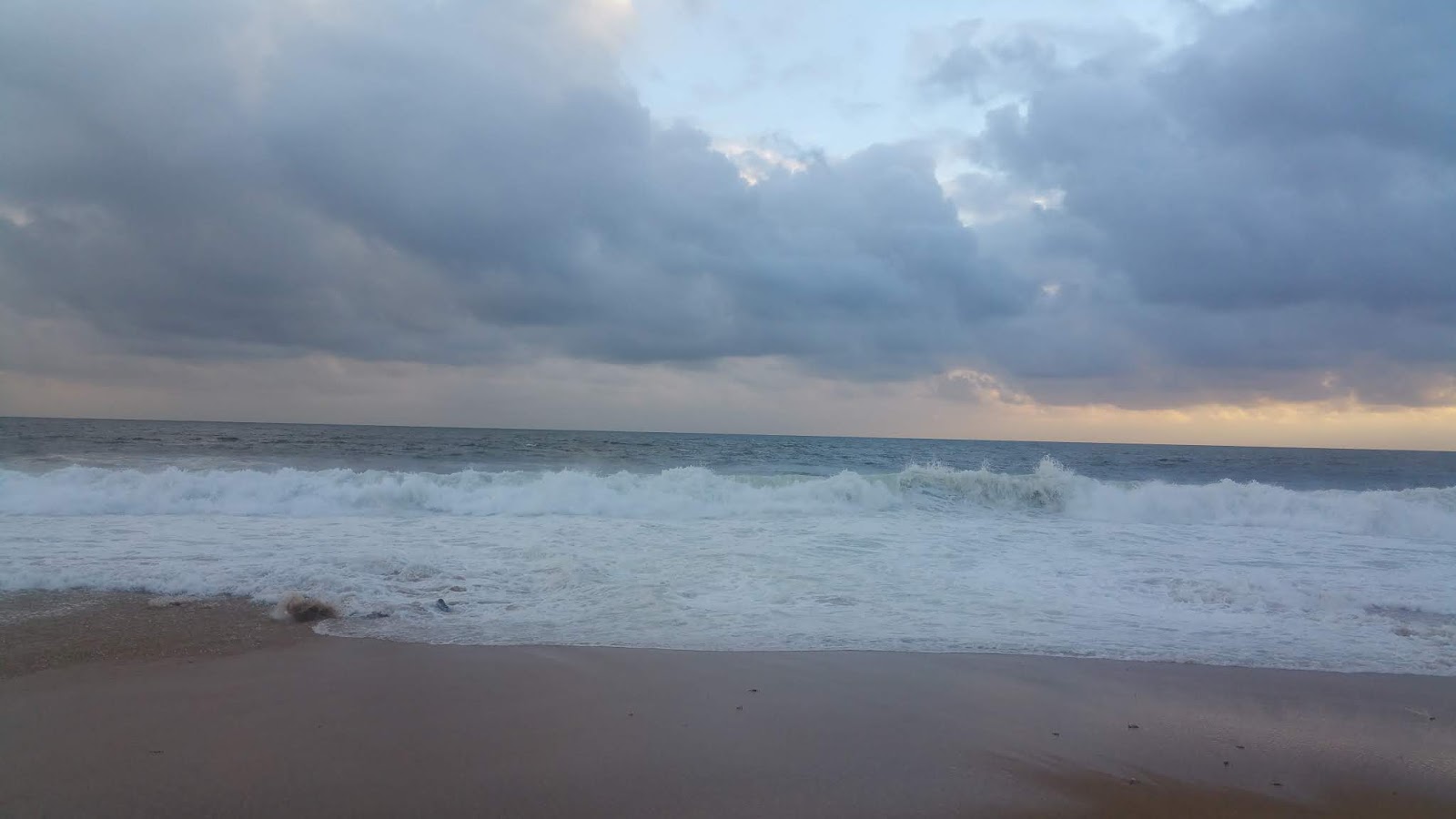
It is raining in Liberia. The rain has been relentless, it pours and pours and then rains some more. Just like the stupidity, idiocy, injustice and cruelty in this world.

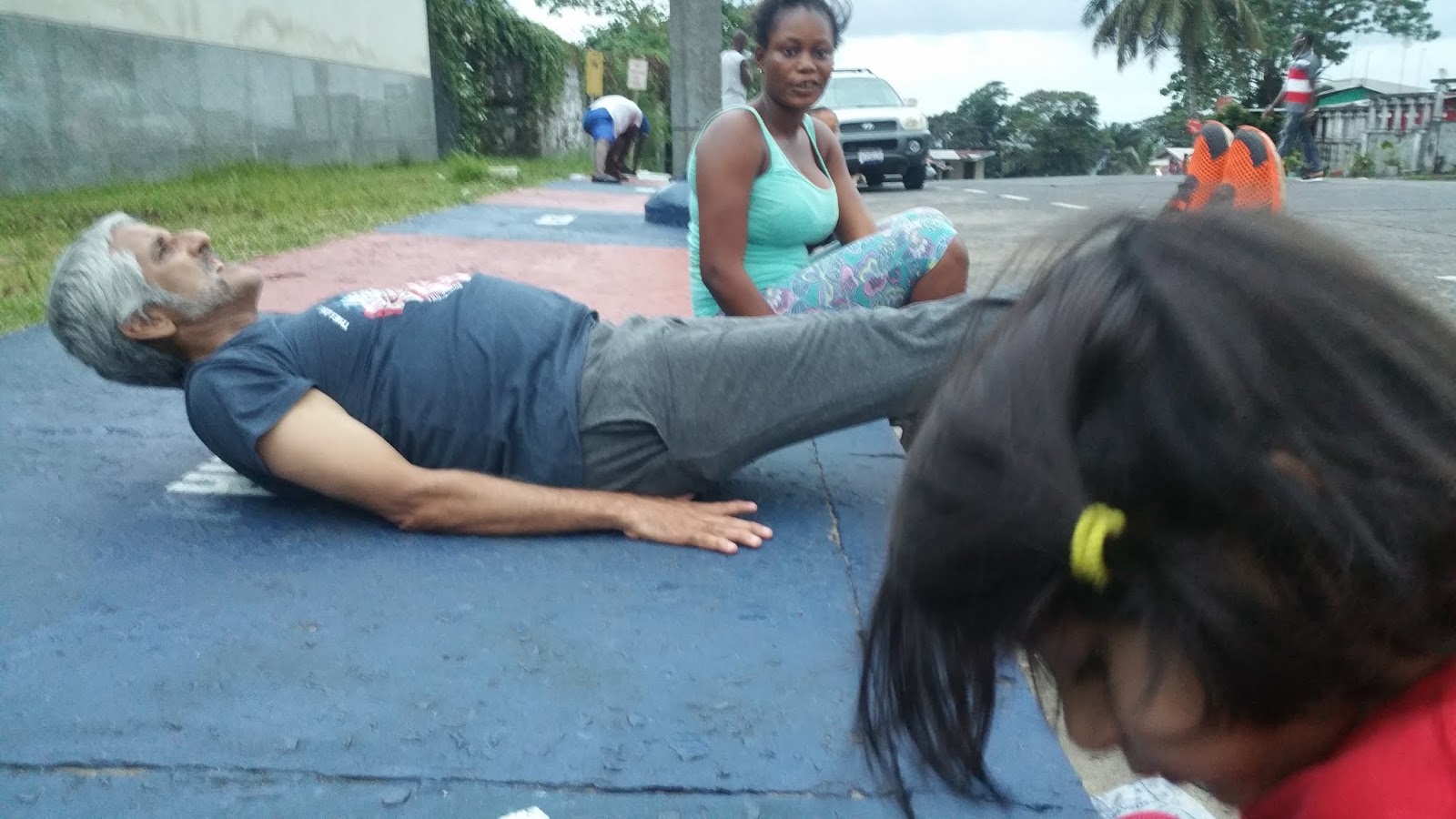
Kavita, Bijli and I got thoroughly drenched.

I bought potatoes, sweet potatoes, carrots and cabbage towards the end of the walk from my favourite market ladies on Benson Street, opposite Saksouk Supermarket. Made a soup for a rainy rainy evening.


Thursday, 16 August 2018

Avocado

Avocado is very abundant and luxurious here in Liberia. So, an easy dish to make is guacamole, "an avocado-based dip, spread, or salad first developed by the Aztecs in what is now Mexico."


Wednesday, 15 August 2018

Dividers and book markers ☕📚

I love saving the dividers in tea bag boxes and saving them for book markers. From the love of tea comes the love of reading books. 


Wednesday, 1 August 2018

Impressions of Ethiopia Part 3 🇪🇹

22 JULY 2018 

We flew to Gondar the next morning. 

The flight was around midday or 1 PM. We needed one hour to get to the airport. The hotel arranged for us to join a van going to the airport which left at around 1030 PM. That morning, Haresh started complaining of a bad flu (when Haresh gets sick, he becomes very uncooperative) and, the hotel (Tukul Village) was helpful and, spoke to a doctor who prescribed medicines on the phone (not the best guarantee of getting a correct diagnosis without seeing a doctor but we were short on time). The hotel staff sped off on a Bajaj rickshaw and, came back with the medicines and, a packing tape, empty boxes and a pair of scissors (to pack all our souvenirs).  Haresh popped the pills and packed our souvenirs (If Haresh had had brought along the 2 suitcases he was allowed, let me not get into all that here.). We had a quick delicious breakfast and, packed our bags into the waiting van. 

It was of course drizzling lightly. We said good by to the hotel manager Alex who said he was sorry the Internet did not work, the POS didn't work, etc. We asked Alex where we should stay in Gondar and he recommended Goha. 

We met the same 2 European girls we had the previous day at the churches and, Kavita immediately said, "it's those girls again, Ami!" It was meant to be a matter of fact statement but it came off as if she was tired of seeing them and, everyone laughed. 

We started the drive towards the Airport. I wish I had made a video of our descent down the mountain. It was raining, there was a beautiful emerald green panorama as far as we could see and, the views down below were stunning. The road is a dirt road, it's not the red earth we have here in West Africa, but a deep brown-blackish earth. We winded down the hill and then drove towards the Airport. 

After we checked in, we had about an hour until the flight. There was a coffee corner and, we sat to have some piping hot coffee prepared by a lady, in all white. The coffee tray was laid with green leaves and, laid out with the small cups. I was later told that the significance of the green is welcome. 

The flight to Gondar was short and, we were soon on ground. It was another beautiful air strip where we landed. The terminal building was beautiful with arches. We soon collected our bags. The arrival hall was full of pictures of local hotels and the Simien Mountains National Park. One taxi driver came to us and, told us he would take us to Goha Hotel. I asked to talk to the Hotel. He let me ring them on his mobile phone. I spoke to someone and, they told me the rate of $ 70 or $ 80 per night. I thought this rate was too much for a standard room and, asked for a discount. Anyway, we decided to hop into the same taxi driver who was driving some passengers to Goha Hotel. I thought we would check out a hotel I had seen advertised in the arrival hall but one quick look at it as we passed told me it was not going to be a very good choice as it still seemed to be under construction.

It was about 20 minutes to the hotel. We passed through the main city. As it was Sunday, it was quiet. The city appeared to be a major one.

Goha Hotel is on a hill and, has magnificent views of the city. It's a 3-4 minute drive up to the hotel. It has a playground for children close to the entrance gates. Clearly, it's an old, iconic hotel but needs renovation as it's a little too shabby. The light went out for almost an hour at night.

We checked in at the reception and, the room rate was about $ 80, if I remember correctly. We opted for a standard room as it was only one night. I tried to pay by visa card but it didn't work. Worse, was how the hotel staff kept up a pretence that the card reader does work at times but clearly, from my experience in Lalibela and even Addis, paying by visa hardly works.

After putting our bags away, we walked around the hotel. The grounds of the hotel outside the restaurant area are stunning, mainly for their views. There was an empty swimming pool and non-functioning fountains. Too bad, everything was so shabby but the natural environment made up for it. There were magnificent trees and flowers all over the grounds of the hotel. The view from our room as quite beautiful, it felt one was looking out into a forest.

We had an excellent lunch with the usual delicious soups. I asked the hotel manager what we could do for a little bit of sight seeing in the vicinity. The manager told us there was a village nearby where Jews lived and it was 2 minutes away. I asked him whether there were any souvenir shops and he said, it was also close. We got a Bajaj at the entrance and, asked the ground hotel staff to translate for us. It quickly ensured that this village was not so close and no one was sure what this place was. Anyway, we agreed with the Bajaj driver how much he'd charge us to take us for a little souvenir shopping and back. It was a nominal amount! Three of us went for a shopping spree. I bought a wooden Gonder cross, a horse made out of yarn, and a couple of scarves.

We went back to the hotel and relaxed a bit in our room before going down for dinner. I had some Ethiopian red wine although Haresh was feeling sick with a fever and cold. I had bought the scarf for him as he complained it was too cold (he had hardly packed properly before coming on this trip, why can't men pack ?). The night was pleasant enough: there was hot water for a shower, a TV with a couple of channels, and we had hot tea brought up to our room.

23 JULY 2018 

The sights we saw in Gonder were magnificent. We visited  Fasil Ghebbi (the Royal Enclosure), Fasilides' Bath and the Debre Berhan Selassie Church.

If you look up Gonder online for tourist information, you'll see that it's palaces and structures are referred to as Ethiopia's Camelot. As usual, comparing a place to Europe's self sense of glory is misleading and downgrades the significance, beauty and essence of the place.  It obfuscates its history. It presents you with a Eurocentric sense of humanity, history and progress. ("Dakar is the Paris of West Africa." "Beirut is the Paris of the Middle East." "Kedarnath: Bollywood's Titanic.") You somehow start thinking that everything actually started from Europe , that that is the birthplace of history, ideas, and humanity itself. You start looking for Paris in Dakar. You start looking for Camelot in Gonder, when you should just be looking at Gonder.

I have definitely experienced some fantastic realisations about Ethiopia's proud ancient history and the presence of Christianity in its lands. Some of Lalibela's oldest rock - hewn churches date back to the 7th century and, Christianity has apparently been in Ethiopia as early as the 4th century. Lalibela was imagined to be mirror of Jerusalem, the city where Jesus preached. The complex of churches, carved out of rock, is breath-taking in it's architectural achievements but also by how ancient it is, how definitively Ethiopian it is. Visiting churches in countries colonised by European powers can be a dull experience as a tourist because the church is more or less a European church, planted there for the colonials. And, Christianity therefore arrived as part of the colonisation project. The Lalibela experience was amazing because one experienced Ethiopian Christianity through the structures of the churches, the architecture, and the art.

The first thing we did this day, though, was to go to a bank and withdraw some cash using a card. This was easy and, we had enough cash to pay the hotel and so on.

After this, we went to Fasil Ghebbi, the Royal Enclosure by Bajaj. We found a guide there who would take us to the Fasilides' Bath and the Debre Berhan Selassie Church.

I wish I had taken some notes during the tour of Fasil Ghebbi to remember what we were told about the palaces, library, the queen's palace, etc. The structures were built from the 17th to the 18th centuries. Like all the days we had experienced, it was cloudy and cool. The grounds of Fasil Ghebbi were emerald green. If you look up Fasil Ghebbi on Wikipedia, you'll read:
Fasil Ghebbi (Royal Enclosure) is the remains of a fortress-city within Gondar, Ethiopia. It was founded in the 17th century by Emperor Fasilides(Fasil) and was the home of Ethiopia's emperors. Its unique architecture shows diverse influences including Nubian styles. The site was inscribed as a UNESCO World Heritage Site in 1979. Ghebbi is an Amharic word for a compound or enclosure.
The main palace is graceful and has round and square towers. The windows and doors have arches.

Fasilides' Bath was described as an Olympic swimming pool to us by the guide. I was confused at this and, even Kavita thought it was going to be a huge swimming pool. When we arrived, about 20 minutes away from Fasil Ghebbi, we saw this was the Emperor's Bath Palace. (It reminded me of how Shalimar Gardens were constructed away from the City Fort/Palace in Lahore where Emperor Jahangir would go to escape the heat and enjoy music and dancing.) It was utterly enchanting.

The façade is a tower which, from the back, overlooks a deep bath. The Tower is constructed in the middle of the Bath, supported by arched columns. This Bath is surrounded by a stone wall. There are ancient trees all around and, in fact, one side, the roots of the trees have grown over part of the stone wall. They are intertwined and, immense in size. For a moment, I thought the place was from a fantasy film.

See a description from a website:

King Fasilides commissioned the construction of what is know as Fasilides' Swimming pool, or Fasilides' Bath in Gondar, beyond the the heart of the city north-west of the Qaha River. There is a two-storeyed battlemented palace standing in a square pool which receives it water from a canal filled by the river, but which is empty most of the time for sanitary reasons. The beautifully restored palace with several rooms and  connected to the land by a bridge makes part of the city's UNESCO World Heritage Site, that includes the Royal Enclosure, Fasil Ghebbi, Fasil's Castle and Mentewab's Palace at Kuskuam.

The Bath was empty but is filled when the Ethiopian Epiphany is celebrated on 19th of January. We were shown photographs of Epiphany by a hawker just outside when we completed the tour.

Debre Berhan Selassie Church was our last stop. While looking up tourist spots, I saw that there was a beautiful church to see at Lake Tana with beautiful art. Of course, it was too far for us because we only had a day in Gonder. Lake Tana would have been a beautiful experience for its beauty and its biodiversity. Apparently, there are many islands in the Lake with monasteries. There were monasteries around Lalibela too but we didn't muster up to any of them. The Narga Selassie Church is on one of the islands. That name struck with me, Selassie.

When we reached the 17th - century Debre Berhan Selassie Church, we found it was locked and, the keeper was away. The guide asked the person at the gate to phone the keeper and, come back. We waited for a few minutes and, finally were able to see it inside. The Church is an immense structure in the middle of a stone-walled enclosure that has the same round tower and graceful arches, features we saw earlier.

The Interior of the Church is fully covered in murals or frescos. The walls were full of iconography, battle scenes, arch angels, saints and Christ.  The ceiling is full of angels.  I was utterly filled with wonder looking up at the ceiling. The walls and ceiling were aglow with the afternoon light. The tones of the paintings were earthen red, red, brown and yellow. In a way, this was the most special moment of the entire trip. I was looking up at Abyssinian angels which were everywhere. I looked around and, was surrounded by an iconography which I had never seen before. It was a startling revelation - this Christian iconography which I had never seen before, had never studied or seen in books or films.

I was transported to my high school Humanities class at the American Community School of Athens (ACS) that I attended from 1995 to 1998. It was a pretty sophisticated class that delved into Western civilisation.


Monday, 30 July 2018

Impressions of Ethiopia Part 2 🇪🇹

Getting to Lalibela , 20  July 2018

We flew to Lalibela Friday morning (20 July) on Ethiopian Airways. Security screening is tight and a little chaotic. We first put all our baggage including shoes in the baggage screening belt and because I can't take off my bangles, was bodily searched. Again, we went through the same with our hand baggage after we checked in. The water bottle I had in my hand was not confiscated though. 

The flight was for 1040 but by 1130, there was still no announcement of boarding. I went to ask staff at our Gate but she said the flight was actually for 12. I was very confused and annoyed and, told her our ticket says the flight is at 1040 and, no one told us it's been delayed. I think there was some miscommunication between us and hardly a few minutes later she announced boarding. 

We posed for a photograph on the tarmac before boarding our Bombardier plane. The airplane was in a very good condition, seemed brand new. Because we had got up early for our flight, we caught an hour-long nap. 

Shortly before our descent to Lalibela, I woke up and watched with wonder at the mountainous, rocky and emerald green scenery, beset by a romantic cloudy and grey weather. It was breath-taking beauty. I excitedly thought about finally visiting Lalibela and, its rock churches. On the tarmac, just outside the small Bombardier, the paved tarmac, under the pale cloudy light, seemed like it had just been freshly pressed. Its greyness sharply gleamed, in contrast with the sheer hilly greenery. 

I had booked Tukul Village the night before through booking.com and sure enough, a placard with my name was visible as we exited the small but neat and clean airport. 

We got into the van. Two other passengers got into the van along with the driver and staff who had my name. It was apparently a half hour to the hotel. The road up to the hotel was not paved. We passed the green countryside, small houses, and farmers tending small fields. In the distance we could see a mountain or rather a hill, it's top covered with white and grey clouds. It reminded me of a conversation in Toni Morrison's Song of Solomon, a novel I read in the American high school in Athens, Greece:
Did you ever see the way the clouds love a mountain? They circle all around it; sometimes you can't even see the mountain for the clouds. But you know what? You go up top and what do you see? His head. The clouds never cover the head. His head pokes through, beacuse the clouds let him; they don't wrap him up. They let him keep his head up high, free, with nothing to hide him or bind him.
I have severe vertigo. I gripped the edge of my seat as we started up the mountain. The driver dropped off the passengers. We winded around the mountain. The dirt road was being graded by machinery. It was a wide road and, part of it had a short stone wall.

We entered the outskirts of Lalibela marked by more village huts, sheep, cows and, tuk tuk's (referred to as Bajaj).

We eventually reached Tukul Village, an extremely charming hotel. The hotel manager, Alex, took to us our room. The rooms are in round huts overlooking the mountain scenery. The hotel is full is bougainvillea and, many other beautiful flowers. Because it was raining, the flowers looked even more bright. The room had stone walls, very lovely cane furniture, a beautiful white bedspread (the white woven Ethiopian cotton) and a very clean bathroom.

We had a very pleasant lunch of tomato soup and simple main dish. The soup was served with a freshly baked bread and a spicy red spread.  I quickly came to realise that ordering soup is not only a safe but 'must' choice. Even in the hotels back in Addis, the soups were extremely delicious. And in all subsequent restaurants, the soup was good. Milk was fresh and, made Kavita drink 2 warm cups a day.

The room rate we got for a family room at Tukul Village was about $ 120.00. I tried to pay by card but it did not go through. The Internet was also not working. Moreover, we had to pay for our own airport shuttle : 100 birr per head. Meanwhile, during our chat to the guide (the fellow who picked us up from the airport was not hotel staff but a guide), we thought we should proceed to Gondar before returning to Addis. We also learned that it would cost $ 50.00 per person to visit the rock churches. So, Haresh went to town with the guide to withdraw some cash directly from a commercial bank using their POS machine and to re-direct our tickets to Gondar and then back to Addis. I stayed back at the hotel and napped. Haresh sent the van back in an hour.

The main commercial part of Lalibela seemed like a village, all dirt roads. After sorting out cash and the tickets, we took a little drive and then came back to the hotel. It was about 4 PM and, the Guide wanted to give us an hour's tour and then continue the next day. The rock churches close at 5 PM. He wanted to charge almost 1000 birr for 1 hour the first day and the same for the next day. We told him we did not need his services anymore. I complained to the hotel for first sending a non-hotel staff to pick us up who was then trying to over charge us for the tour. Alex apologised and then said he would  arrange for a guide the next day for 700 birr. And we would also have to spend 100 birr to be droped at the churches. He told us to be ready at 9 AM and, that the churches would be closed for a lunch break from 12 to 2 PM. It was going to be a full day. 

We walked near our hotel. There were many souvenir shops. I made some purchases before we got invited for a coffee ceremony at a small shop. The shop owner explained that she often roasted coffee beans for tourists. She began with roasting the green beans on a coat pot. This took a good 15-20 minutes. We enjoyed the atmosphere at her little shop. Her daughter was being carried on the back of her younger sister. Next door was another small shop where another coffee ceremony was going on. The street was not busy with hardly a few tuk tuk's going by. We saw some tourists walk by. Some sheep also went by. Small children came to chat with us. There are two videos I made: Coffee Ceremony, Lalibela and Coffee Ceremony ii.  

Mean while, she arranged the place with green leaves and tidied up the place. After the beans were roasted they were ground in a mortar and pestle. The long and slender coffee pot was filled with water and, the coffee was gradually added to the water. She would take out some coffee, mix with hot water separately and then add it back to the coffee pot. I asked her if corn was traditionally popped and served with coffee as I had seen it at coffee shops and hotel lobbies before. She said yes and asked us if we wanted any popcorn. I don't know why Haresh politely declined it. She gave us some plain bread instead. Finally the coffee was served and, it was really good. I am not an avid coffee drinker but it was very nice. I drank it bitter without any sugar. I had two cups.

We sometimes drink Lebanese coffee at restaurants in Monrovia after a heavy meal but that coffee is rather thick and heavy. This coffee was smooth. Haresh asked our host to prepare 4 bags of freshly roasted coffee and we would pick it up the next day.

We trudged home to our hotel. We had a simple but delicious meal at the hotel restaurant before retiring for the night. It was drizzling and, quite chilly. They had heavy blankets in the rooms to keep us warm. It rained heavily all night but other than the sound of the rain, it was peaceful.

I was relishing this wintry experience after the being in Islamabad where temperatures had climbed to  the 40s in May and June.

Unfortunately, the wi-fi was not working. Intermittently, one could briefly go online but it was very slow. WhatsApp though was not working at all.

Lalibela, 21 July 2018

Pre-Lalibela Excitement and Thoughts

The first time I heard of Lalibela was my brother Tariq's descriptions from his sightseeing visit more than 10 years ago. They were of course very splendid but traveling through Ethiopia was not easy. He also was not able to withdraw cash from ATMs and use his card. Some photographs from my brother's Facebook Ethiopia album stuck in my mind but mainly of himself with locals and, his best friend who he was traveling with. I don't remember much of structures and sights from his photographs.

Over the years thanks to the bombardment of images and articles on the Internet, images of 'must-see' places have become lodged in our minds, including Lalibela as a wonder you have to see to believe it. I have also become much more interested in traveling and sight seeing as I grow older. So, I was quite eager and excited to finally see Lalibela.

If you linger long enough on the name of the Lalibela, you might notice what a beautiful name it is. Say it and pause on each syllable: La-li-bela.

One of my father's ex Foreign Office colleagues was posted to Ethiopia as Pakistan Ambassador and, his daughters were excitedly describing all the sight seeing they had done while posted there. They had apparently walked all night to go see a volcano. And interestingly, Ethiopia also had one of the world's oldest Muslim communities.

A SOAS classmate had spent a month in Ethiopia on assignment just before I arrived and, she shared some photographs of Lalibela but I avoided seeing them because I was soon going to visit Lalibela myself.

In one way, I am glad I was unprepared before seeing the wonder that is the experience of visiting the rock-hewn churches of Lalibela. There is not one but 11 churches carved out of the mountain about a thousand years ago by the kings of Lalibela.  I have not even read much about them and just seen a few token images. I have no real sense of history of Ethiopia. Nor any real visual sense of Ethiopian Christianity   except for the token images that have been lodged in our heads.

The wonder that is Lalibela

Much later, towards the end of our visit in the country, I realised and understood the very moving and mesmerising experience of having visited historic Ethiopian churches, the structures, the iconography, the images, their impact: that Christianity did not come as a colonising force in Ethiopia. Christianity is as old as Ethiopia. And, Ethiopia has a long, proud history.

We started our tour at about 10 AM. The Guide, Maereg  met us at our hotel after breakfast and, in a van we proceeded to the church complex. The Museum was hardly 5 minutes away by the van. We paid the $ 100.00 fees for 2 peoples. The Museum itself was just one room where another Guide only had the authority to give us a tour. The Museum was apparently set up with the help of the EU, if I remember correctly.

The Museum housed royal robes, ornaments, and very old texts. The museum's condition was a bit dingy, hardly befitting for the 1,000-year history of the area.  I could only vaguely understand the Guide. I wish there had been some plaques in various languages. I also wish a simple map was provided (free or for sale) of the rock churches to give us a sense of the scale of the complex of the churches and so that we could easily remember the names. I googled a map just now. See below:


The Guide said it was in King Lalibela's time that the first Church was built. He said the churches were built in the 11th century and, the whole area was meant to be a representation of Lalibela.  There was a painting in the Museum and, the Guide said it was St George. And, then St. George kept coming up in his tour. I wondered how the saint's image and martyrdom had traveled to Ethiopia. The museum guide didn't understand my question but our guide started to explain the legend of St. George to me.

Much later, towards the end of our visit in the country, I realised and understood the very moving and mesmerising experience of having visited historic Ethiopian churches, the structures, the iconography, the images, their impact: that Christianity did not come as a colonising force in Ethiopia. Christianity is as old as Ethiopia. And, Ethiopia has a long, proud history.

You really need to see the rock-hewn churches of Lalibela to believe it. During the morning half of the tour, we saw the souther cluster, north of the Jordan River. The first church you will see is Bet Medhane Alem, which means Saviour of the World. We stood on the edge and then peered below to see the magnificent structure which reminds one of a temple and then climbed down the stairs to see the first of the 11 rock churches (it should be noted 1 out of the 11 churches was under renovation and closed for visitations). Steel pillars holding up a covering or shelter from the elements have been erected (these were installed all many of the churches, not over Biete Giyorgis, though) around Bet Medhane Alem. Our Guide explained that the protective pillars had, over time, destabilised the foundation and, they would have to be removed. The Government was collecting funds to remove them and/or install some new protective cover.

We had to remove our shoes before we entered every church. Being the rainy season, the rocks were damp and mossy but we got used to it. I have normally never associated the tradition of removing shoes before entering a church (only been used to removing shoes for temples and mosques) so this was a unique experience. There was a priest or two in every church, quietly sitting on a chair, almost nodding, attired in white cotton robes, or reading. Our Guide explained the priests were on salary. I remarked that the interior of the churches was majestic as was seeing them from outside, but the shiny, cheap colourful cloths adorning the inside destroyed the atmosphere a little. Then, there were some ordinary print images of  white Jesus. Maereg said guides had relayed this information to the priests a few times. There was a hint of resentment in his voice, hinting at the salaries the priests received from the tourism tax that visitors had to pay.

Maereg was very thorough and helpful through out the day. He offered  a lot of history and information on every single church. I wish I had taken notes of the tour because I can't remember many details, now. He pointed out the significance of the number of pillars, the ancient fading murals inside the churches, the cisterns for baptism, botched efforts for conservation during the Italian occupation, the symbolic crevices for the graves for the prophets, which pillar or facade was original or not, and so on. Thinking about the tour, it is a little bit of a blur in my mind.

The northern cluster of churches are relatively easy to visit compared to the southern cluster. We completed our morning tour at Bet Giorgis, the most famous of them all. It is at a little distance and is in fact, the only church in the wester cluster. As we were led to it, we could see its cross-shaped roof from a high vantage point. It's roof is shaped like a cross and, as you get closer to it and peer down the pit, you can truly witness the wonder of Bet Giorgis. All the churches have been carved out of the mountain, single monolithic churches but in the northern and southern clusters, the churches are in close proximity. Bet Giorgis stands alone so the feat of its build is even more breathtaking and striking. It's facets have yellow and pink shades, caused by the elements, I imagine, in contrast to the red muddy colour of the other churches. We climbed down. It is a very tall structure and magnificnet in its glory. We walked around it and, then entered it.

The Ethiopian Christian calendar marks Christmas and Epiphany. These are 6 and 7 January. Lalibela becomes a site of pilgrimage and ceremony. There are priests with white robes conducting rituals and ceremony. One has seen these images online and in magazines and, Bet Giorgis is certainly one of the most famous of the Lalibela churches.

The southern cluster of churches is more challenging to visit. See a video I made at the start: Lalibela, starting the southern cluster of churches tour and About to start tour of southern cluster of churches, Lalibela. There are steeper stairs, a ravine you cross and even a pitch-black tunnel you walk through to get from one church to the other. The tour of the southern cluster started with Gabriel - Rufael which one could only access through a bridge which  is dated much more recently. Before you cross the bridge, you peer down the side and, see wells and cisterns, at least 10-15 meters below. After we visited the church, we met tourists from Austria and Sweden. They described visiting Danakil Depression that seems like a fantastical place. Afterwards, we kept running into them, even the next day in the bus taking us to the airport. Kavita kept saying "It's those girls again!"

We entered a pitch black tunnel in which we walked for less than a minute, climbed up some stairs and came to the entrance of another church. See the video I made here: Walked through tunnels and climbing out, Lalibela, 21 JULY 2018. There was a man on a bench making funny duck sounds at the entrance of the church. After this, we saw one or two more churches, I forget.

The tour is a little bit of a blur in my head, now. We visited 10 churches in total because one was closed for renovation. At least one church may not have been a church. To write this post, I did some quick reading at online resources such as: http://www.selamta.net/lalibela.htm. It's a full-day tour and,   as such, one cannot spend too much time at one church. We felt a real sense of accomplishment and wonder at having seen the whole complex. I look forward to reading more. What's more there are more rock-hewn churches to be seen in Ethiopia.

Later that evening, I bought some souvenirs from the shops close by. At one shop, a young girl showed me all the things and, spoke in English. I went next door and, another young girl confidently sold me more things. They didn't budget too much on the prices! Kavita also enjoyed looking around the shops. It turned out they were cousins and, a third girl was visiting from Addis.  They both helped me to carry my things back to the hotel and, I offered them a drink at the hotel restaurant. We chatted about small things. I learned they were huge fans of Bollywood and hummed a few popular tracks. They said families are very conservative and, marriages are usually arranged. The complimented me on my shalwar kameez and, when I asked about the Ethiopian traditional clothes, they said the cloth is quite expensive. We even exchanged numbers. Since I came back, one girl, Hakyl, has been sending me hello messages.

Both the nights we spent at the hotel, the hotel restaurant was full of tourists. There were also a group of folks camping on the grounds and, cooking their food at a camp site they had made. They were traveling in a bus.

The next day we flew to Gondar. 

Thursday, 19 July 2018

First impressions of Ethiopia 🇪🇹

It's my second day here in Addis Ababa and these are my first impressions. 

Kavita and I flew in from Islamabad via Dubai with Ethiopian Airlines on Tuesday evening. Haresh literally landed from Monrovia via Accra (also with Ethiopian Airlines) literally a few hours later. While I was looking for my 4th bag in the chaotic baggage hall, Haresh walked through the doors and, we greeted him excitedly. I had positioned our baggage trolleys and Kavita near the door while I looked for our 4th bag. 

The baggage hall itself is dimly lit and, passengers had crowded around one conveyer belt with their trolleys, leaving no room to look for yours. It was simply chaos. It seemed just about everyone had purchased a huge TV from Dubai and, they were offloading them from the belt and, trying to balance them on the trolley. I was at first amused and, then annoyed with how I could not squeeze myself anywhere. All this time, a horrific screeching could be heard from the baggage screening (which you had to pass through before exiting the airport). I started to feel cold and, got a splitting head ache. Haresh's arrival of course was a good diversion and it was good to be reunited after four and a half months. 

We had to report the missing piece and, Baggage Services informed us the bag was left behind in Dubai and would arrive with the 6 AM flight next day. 

We exited the hall and, since we had not booked any hotels (it was my fault yes), we looked for hotel desks in the outer hall: Radission Blu, Ramada, Hilton, Elily, etc. We selected a hotel after a hotel rep from Jupiter Hotel convinced us and, were escorted outside where a hotel van would pick us from. 

The Airport was shabby and, outside I was greeted with a very cold night air! What? It was cold! And, the genius that I am, I had not bothered to look up the weather online. I had left behind a cupboard of wintry coats, sweaters and beautiful cashmere shawls. I stood shivering! Kavita thankfully had one of many fleeces and more in the suitcase (her entire wardrobe is gifted to her by my mother who buys her clothes in London and Islamabad). Haresh was enjoying the icy cold weather. 

Hotels 

The first hotel we stayed at for the first night was apparently a 4-star hotel but it was shabby and unkempt. The decor colours were dingy and kitsch. The carpeting was an ugly brown. The bathroom looked like it had never been cleaned. The water was lukewarm. I just climbed into bed without taking a shower and, covered my head in the duvet, at least thankful for a warm blanket. The hotel staff, though, were kind and, went to a 24-hour pharmacy to buy me a strip of Panadol. All of us dozed off at 1130 or midnight and, then were woken up by room service at 1 AM. We had some good soup, a very questionable lasagna and a so-so burger. If I pointed out any flaws, Haresh would immediately shoot them down. 

The morning, I booked Elily Hotel (apparently 5-star) for a slightly better rate through Booking.com and, we shifted there. We got a spacious suite and, we all were quite pleased with it. The lobby is quite nice and, the corridors emanate the smell of eucalyptus. The glass elevator is also very beautiful. Stunningly beautiful and large rose bouquets are to be found all over the hotel. These are changed every day.  But still, for a 5-star hotel, I can't help notice how old the fixtures are. The bathroom belongs to another era altogether. The towels are so washed out and old. The bathroom shower curtain is pathetically old and, really cheap. I found a couple of dead cockroaches in the corner of the room. Service is generally good, though.

The most interesting thing happened while checking into Elily Hotel. I tried to be a little over smart and pointed out the seemingly incorrect time on the clock that showed Ethiopia time (the rest of the clocks showed other capital times, as is typical in hotels). It was around midday but the Ethiopia clock showed a 6-hour difference. The lady at the reception said they have their own time in Ethiopia, a little haughtily. I thought she was angry that I pointed out that the clock wasn't working. Later during my trip I realised that local time has a six-hour difference. I looked it up and, read that "Almost all Ethiopians use a 12-hour clock, with one cycle of 1 to 12 from dawn to dusk, and the other cycle from dusk to dawn. Unlike the convention in most countries, the start of the day is dawn, rather than midnight. "

The city

The first day, I was hell bent on finding a sweater or light coat. I was sure I only needed to go to a mall. We first headed to Yod Abyssinia for lunch.  I was recommended by a friend who had stayed in Ethiopia for a month-long assignment and, looked forward to trying some authentic Ethiopian cuisine. As we drove towards the restaurant, I found the views of the city to be extremely shabby. A lot of construction is going on. And, with the wet cold weather, everything looked damp and depressing, especially the concrete. There were yellow taxis in newer cars and then blue taxis with very old car models. 

Addis is framed by hills and, is full of greenery. So at least it has given some respite to one's view of the city. 

Yod Abyssinia's entrance itself was very poor. We walked through a very rough carpark to enter the premises. The restaurant itself is striking with traditional seating, beautiful decor, and stained glass windows. We ordered a traditional platter of injera and wat. Unfortunately, the food seemed cold and, I didn't enjoy it. Injera itself is served cold so all in all, I just didn't enjoy the food. Haresh feasted himself. We paid $ 25.00 for the platter, a glass of wine and a local beer. 

Afterwards, I thought we would just jump into the shops and, get myself a piece of warm clothing. We got dropped off at the Morning Star Mall. We walked from shop to shop. There wasn't any good department store. The fashion boutiques had Chinese items or some odd piece from one Western brand or the other. I balked at the prices: $ 70 for a plain sweater! We went from shop to shop. 

We stopped at a coffeeshop and got some snacks. It was reasonably priced. There was a traditional coffee corner where a lady in traditional white dress was serving coffee. 

We went to the next door Edna Mall and, Kavita enjoyed herself at the arcades. I couldn't find any shop where I could be a reasonably priced sweater or light coat. Last, we walked to the Holy Saviour Church. We walked through a garden to see the church. Beggars were at the entrance. People walking to the Church were kneeling and praying. When we got to the Church, people were kneeling at a shrine, on the walls and, some were even weeping. 

Sight seeing

I made a list of things to go see in Addis Ababa in the morning. Google came up with: 
  1. "Red Terror" Martyrs' Memorial Museum: Museum dedicated to 'Red Terror' victims. History museum dedicated to victims of the 1977 & 1978 'Red Terror' period in Ethiopia.
  2. Tiglachin Monument: The Tiglachin monument is a memorial to Ethiopian and Cuban soldiers involved in the Ogaden War. It was built under Mengistu Haile Mariam on Churchill Avenue in Addis Ababa. The monument is composed
  3. Yekatit 12 monument: Memorial to historic massacre victims : Obelisk commemorating the politically motivated mass killings of Ethiopians by Italians in 1937
  4. National Museum of Ethiopia: Ancient relics, contemporary paintings; the famous fossilized bones of the early hominid Lucy.
  5. Holy Trinity Cathedral: Historic 1930s cathedral & burial site: This historic 1930s cathedral; royal burial site has a copper dome, murals; many ornate features.
You can see how many politically significant sites are in Addis. 

Today we bought tickets to Lalibela at the Ethiopian Airways office at the Hilton. I had been told from a UK friend (who had been working in Addis for a month) that the price for a return ticket would be 300 British Pounds and, local flights are monopolised by Ethiopian Airways. We bought our tickets at Ethiopian Airways at the Hilton and, paid about $ 100 each. Because we had flown in with Ethiopian, we paid $ 100.00 each. In fact, we did not have our tickets with us but the Ethiopian Airways staff was able to look up us up using our passports. 

We then proceeded to Lucy Lounge for a fantastic lunch. The service was impeccable and so was the food. I finally started to enjoy my time in Addis. Kavita wandered around the garden and, found one stunningly beautiful flower after another. It started to lightly drizzle.

The weather is how Islamabad is in November: quite chilly!

I really enjoyed seeing Lucy, our human ancestor, at the National Museum. It reminded me of 7th grade class at the American School of Bucharest and, classes with Mrs. Suma who taught us Lucy, cave paintings, etc. It's a good museum with ancient human fossils, pottery, paintings and important features of Ethiopia's royalty including Emperor Haile Selassie's Throne. 

We walked along the wide boulevard to see the Church of Maryam and, then the Holy Trinity Cathedral. The sidewalk and the boulevard is very wide linked with pine trees. Things seem a little 'shabby' and not well maintained. I had a sense of my trip in Iran in 2008 with my brother - the sense of how closed and frozen things are.

We stopped to have tea and coffee at a small 'dhaba' close to the National Museum. Next to it, some outdoor shacks were selling clothes. I managed to finally find a long sweater for 1,500 birr, that is $ 50.00! The sweater is OK but would have paid $ 10.00 or maybe $ 15.00 for it anywhere else.

The largest market in Africa is in Addis: Mercato. We were told it was too far away and, perhaps I would have found some reasonably priced warm clothes. At least I learned something from my search for warm clothes : clothes are expensive!

The experience at the churches has been quite significant. I have seen many Churches in Europe as a kid and adult but never experienced Christianity like this in Africa. The structures are very impressive and, the atmosphere was very sombre, serious and, profound. We missed the opening time of all the Churches but still could see men and women kneeling and praying at the entrances and walls. In fact, at the Trinity Church, a priest was giving a very long sermon over a microphone. 

Although I am not so religious any more and, not sure whether there is a Creator in the religious sense, it is still always a profound feeling to see worshippers and believers at holy places. That they are full of religious spirit and, are moved, praying, weeping and, in awe of the place, fills one with a certain quiet. I know how it feels to pray in earnest, eyes closed, appealing to a higher deity, seeking good fortune and blessings, protection for one's loved ones. 

We found an unofficial guide at the Church who gave us a good sense of the Church and how historical it is. In fact, Haile Selassie's tomb is in the Church and we can only see it in the day time before 5 PM. There was also a smaller church built by Emperor Menelik. He said, Ethiopia is the only place not colonised by Europeans! We all know this fact, but to actually heard this while in Ethiopia is a treat. 

We walked the overhead bridge near the Victory Monument and, got some good views of the square. The bridge was  rackety and, extremely old. 

Overall Impressions

We were told black market money exchanges have been banned. Exchange of money is strictly controlled. Exports of coffee, leather, flowers, etc are controlled by the government. 

I could not use my UK Bank Card to withdraw cash from the ATMs. Sometimes even payment through a card has been a challenge because the "system is down." 

All public places including malls and hotels and museums are staffed by security who throughly check your belongings and person before you can enter.

It seems that clothes are imported and, are extremely expensive! People are mostly wearing Western wear and since it's the rainy season, everyone is wearing warm clothes. 

Entrance to the National Museum was only 10 birr per person and I bought 30 beautiful postcards for 60 birr. It's  27.65 Birr to 1 US $. 

Taxis though are a bit of a rip off. They aren't metered and, they would like to charge you as much as they can. It cost us $ 12.00 for a one-way trip from our Hotel to the restaurant. So you need to get the hang of it and bargain as much as you can. Start with 50 birr for any trip. 

Modern coffeeshops also have the traditional coffee corner where a woman is serving coffee by roasting the beans. Everyone sits on short stools. 

Addis is a big urban space with sky scrapers.

It's not a liberalised economy as we are used to everywhere else so you will not catch familiar global brands.

The only name I recognised was Pizza Hut but wonder whether it was the real Pizza Hut.

Soup is delicious. 

Haresh said, "if all this development was done by export of coffee" then it is quite impressive. 

We are off to Lalibela tomorrow. 

Friday, 13 July 2018

Begging girls

Kavita has been going to Rung School of Music and Arts for the past 2 weeks. Rung School is located in F-8 Markaz. I saw the flyer for it during one of my evening walks.

After dropping her at the school, I would usually spend the early afternoon at the Red Door café next door.

At least twice a day, I would be accosted by the begging girls. Are they children of children of Afghani refugees created by the civil war in the 80s? Are they children of internal refugees from the north western areas?

The girls are clad in colourful shalwar kameez, their heads covered. The faces are angelic but they cling to you, follow you, their palms facing you, asking for money. They don't leave your side.

They laugh, make faces, and ask for money.

"But who leaves these small girls here"? I asked shopkeepers around. They say, cars leave them and then pick them up. "The parents are bad."

I saw some women give them bags of crisps.

People become apathetic over time at seeing begging children. It becomes part of the scene. And, this is only Islamabad, a small artificial city. In bigger cities, begging is more visible and in bigger numbers.

The linger around in the plaza all day long, sitting and playing on stairs following people around.

There are some tiny little girls and, then older girls who, I saw, get into scrapes with each other.  I saw one girl make a mean face at another one and, then I started imagining their street lives.

One girl followed me into the car and, I frustratedly gave her 10 rupees, knowingly that one should not give money to begging children. Another one followed me and, then she was hit by another car in the car park, by the side mirror. She wept and we came out to see and then we drove off. I was extremely angry, helpless and sad. Should we take her to a doctor, I wondered.

The Careem driver said the father must be on drugs and forces his children to beg.

What kind of society do we live in? Do we have any programmes to rehabilitate the population which is forced to beg? Who is there to protect these children from this harsh life?

How does one feel, leaving one's child to attend an air conditioned school where she will learn music and art and, where, small girls are left to beg in the sweltering heat, often without slippers, following people to beg or playing on the dirty floor and stairs? What kind of moral universe do we exist in where such inequality and random luck dictate lives?


Tuesday, 10 July 2018

Does Imran Khan have any shred of dignity?

Imran Khan is playing some real dirty politics and, has been for a while. He's got the ordinary folks on his side with 'end corruption slogans.' He's got the upper middle class from the the beginning because of his sexy, glamorous and patriotic career as a cricketer, playboy and philanthropist. Bro politics gets him the support from ignorant celebrities. The past few years, industrialists and political turncoats hopped on as his party finally started to gain muscle and seats. The common theme through out has been his born-again Muslim persona as a good Muslim and, for that he's spoken in favour of the Taliban (although he claims he was always against the brute military flattening of the north western areas). Who can forget his container politics and his thuggish occupation of Islamabad in 2014 for example? He snuck in smooth-tongued snakes like Aamir Liaqat in his batting order. Now he's throwing around #khatmenabuwat and openly practicing hate politics against a minority. (And, how do explain #khatmenabuwat to the uninitiated ?) Folks say he's "cleaned up" Khyber Pakhtunkhwa and, it's a model for good administration. Is it true? But all in all, we are, for sure, seeing first hand how bigots, sexists, and populist leaders come to power. 
Since George Weah (ex-footballer and loved by the public as they relate to him, he who also came from the slums) came to power in Liberia, I've been thinking a lot about how ex-sports figures can rise up in politics. What parallels or common themes are there, if any, in George Weah's and Imran Khan's lives? I was chatting to a friend of mine, together with him, we endlessly obsess over international politics and films, and she said a good starting point to assess political figures is whether you believe they have personal dignity or not. Does Imran Khan have any dignity when he panders to hate mongering?